









I. Global Flavor Restrictions: Three Typical Regulatory Pathways
As of mid-2026, global e-cigarette flavor regulation has taken three distinct pathways:
| Pathway | Core Logic | Representative Markets |
| Naming Restriction | Flavors remain legal, but candy-style names and sensory-concept descriptions are banned | UK (under consultation) |
| Category Restriction | Only tobacco, menthol, or unflavored e-liquids remain legal; fruit, dessert, and other flavors exit the market | Netherlands, Finland, Ireland (under review), Estonia, Denmark, and others |
| Approval Pathway | Flavored products are authorized through scientific review mechanisms such as PMTA, on a per-product basis | United States (FDA) |
These pathways are not mutually exclusive. Some countries are in discussions to transition from naming restrictions to category restrictions. For brands, the core challenge is clear: the same formulation line may face different compliance requirements across markets.
II. Key Country and Region Flavor Restriction Policies
Europe
1. United Kingdom: Naming Restriction + Devolved Powers
The UK's Tobacco and Vapes Act 2026 received Royal Assent on April 29, 2026, marking one of the country's most significant nicotine-related legislation in recent years.
Legislative Status:
• The Tobacco and Vapes Act 2026 has received Royal Assent, granting ministers the power to restrict flavors through secondary legislation (without requiring further primary legislation).
• Specific flavor naming restrictions, plain packaging, and counter display shielding rules are currently under UK-wide public consultation (launched July 10, 2026, running for 12 weeks), with no formal regulations yet enacted.
• Fruit, dessert, and menthol flavors remain legally available in the UK market; no flavor ingredient ban has taken effect.
Flavor-Related Provisions (based on the enacted Act and consultation proposals):
Ministers have been granted legislative authority to restrict flavors through secondary legislation. The initial focus is on restricting flavor naming — only single-word descriptors (e.g., "Apple") will be permitted; multi-sensory concept names like "Cosmic Fog" and "Cotton Candy," as well as candy- and dessert-related names, will be prohibited. Consultation proposals also include device colors limited to white, black, or gray, plain packaging, and counter display shielding. Future expansion to flavor ingredient restrictions may follow, pending Department of Health research.
Devolution: England, Wales, Scotland, and Northern Ireland each hold independent discretion — local rules may differ. Scotland's Public Health Minister has publicly supported restricting flavor naming and packaging design. The Welsh Government launched an independent consultation on July 10, 2026, proposing plain packaging + single-word flavor naming + counter display shielding.
Confirmed Key Dates:
• October 1, 2026: Vaping Products Duty takes effect (£2.20/10ml e-liquid, including nicotine-free products).
• October 29, 2026: Sale of non-nicotine e-cigarettes and nicotine pouches to under-18s becomes illegal; disposable vape ban reaches its first anniversary.
• January 1, 2027: Generational tobacco ban begins (individuals born January 1, 2009 or later permanently prohibited from purchasing tobacco).
• June 1, 2027: Comprehensive ban on e-cigarette advertising and sponsorship (UK-wide).
Reference Data: Over 25% of 11–16 year-olds in Wales have tried e-cigarettes (nearly 7% use weekly); over 45% of 16 year-olds have tried e-cigarettes (16% use weekly). Approximately 1 million 11–17 year-olds in Great Britain experimented with e-cigarettes in 2025 (source: UK Government consultation announcement citing ASH report).
For brands, the UK's flavor ingredients are unlikely to face comprehensive restrictions in the short term, but naming compliance is the first hurdle to clear. It is advisable to begin auditing SKU flavor names ahead of time, evaluating the feasibility of replacing "composite concept names" with "single-ingredient names," while closely monitoring the formal regulatory direction after the 12-week consultation period concludes.
2. Netherlands: Flavor Ban in Effect, Illicit Channel Issue Worth Noting
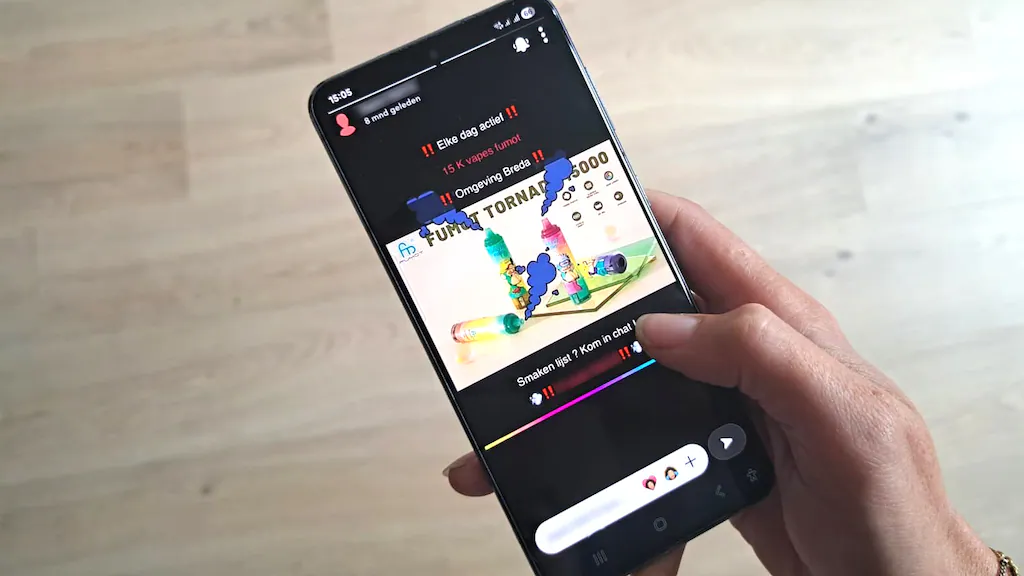
The Netherlands implemented flavor restrictions relatively early among EU member states in 2024. According to a research report commissioned by the Dutch Ministry of Health and conducted by Bureau Beke (published April 2026), as reported by The Journal.ie: 40% of surveyed users reduced their e-cigarette use post-ban (22% quit entirely); among those who quit, 73% did not use any alternative product; 6% of respondents switched back to combustible cigarettes, citing the flavor ban as the reason; and 87% of surveyed e-cigarette users currently obtain flavored products through non-official channels, including overseas legal markets or domestic illicit channels — hundreds of Dutch shops continue to sell e-cigarettes through non-official channels.
The above data represents survey sample results; statistical details such as sample size and confidence intervals were not fully disclosed in the reporting. The Netherlands case demonstrates that flavor restrictions can be effective in reducing legal-channel usage rates, but are accompanied by expansion of illicit channels. Brands should evaluate comprehensively, considering compliance costs, legal market share shifts, and illicit channel competition.
3. Finland: Early Adopter of Flavor Restrictions (since 2016)
Under Finland's Tobacco Act (No. 549/2016), Sections 2(25), 11(1)(1), and 24(1)(2), all e-liquids with characteristic flavors are prohibited; only tobacco-flavored e-liquids may be legally sold. As one of the earlier EU member states to implement flavor restrictions, Finland's long-term enforcement experience provides a reference for countries following suit.
4. Ireland: Tobacco + Unflavored Only (Under Parliamentary Review)
On June 24, 2026, Ireland's Public Health (Tobacco Products and Nicotine Inhaling Products) (Amendment) Bill 2026 entered its Fourth Stage of parliamentary review. The bill proposes limiting legally sold e-cigarette flavors to tobacco and unflavored only, and regulating packaging appearance to reduce appeal to minors. A point of contention: opponents argue the restriction may drive consumers toward illicit channels. The bill remains under parliamentary review; final provisions may be amended. Brands should refer to the ultimately enacted text.
5. Other EU Member States with Implemented Flavor Restrictions
| Country | Year Implemented | Legal Flavors | Status |
| Estonia | 2020 | Tobacco + Menthol | In effect |
| Denmark | 2022 | Tobacco + Menthol | In effect |
| Lithuania | Implemented | Tobacco | In effect |
| Hungary | Implemented | Tobacco | In effect |
| Slovenia | Implemented | Tobacco | In effect |
| Latvia | Implemented | Tobacco | In effect |
Specific implementation dates and clause details may vary by country; refer to each country's latest official regulatory text.
North America
6. United States (FDA): Flavored Product Approval Breakthrough via PMTA Pathway
On May 5, 2026, the U.S. FDA authorized four Glas-brand e-cigarette products for market through the PMTA pathway. Previously, all FDA-authorized ENDS products were tobacco or menthol flavored; this authorization includes Mango (Gold) and Blueberry (Sapphire) flavors — the first non-tobacco, non-menthol flavored ENDS products authorized by the FDA. As of this authorization, the FDA has cumulatively authorized 45 ENDS products.
Authorized Product Details:
| Product | Flavor | Nicotine Strength |
| Glas G2 Pod — Classic Menthol | Menthol | 50mg/ml (5%) |
| Glas G2 Pod — Fresh Menthol | Menthol | 50mg/ml (5%) |
| Glas G2 Pod — Gold | Mango | 50mg/ml (5%) |
| Glas G2 Pod — Sapphire | Blueberry | 50mg/ml (5%) |
Key Authorization Conditions: The Glas G2 device is equipped with a Bluetooth age verification system (government ID verification + Bluetooth phone pairing + biometric check-in); the device cannot operate when away from a verified phone. FDA review concluded that the majority of adults aged 21+ can successfully complete verification, while adolescents and young adults are unlikely to pass. All advertising must be precisely targeted to adults 21+, with audience demographic data reported to the FDA. Other brands seeking to sell flavored e-cigarette products in the U.S. market must independently submit scientific documentation through the PMTA pathway and obtain FDA authorization on a per-product basis before legal market entry.
The FDA's shift from authorizing only tobacco/menthol flavors to a "scientific review + hardware age verification" model raises compliance thresholds while opening market space. Brands should monitor two directions: PMTA scientific documentation preparation capability, and age verification hardware integration capability. Disposable e-cigarettes (without Bluetooth/App) face higher difficulty in passing PMTA review under the current framework.
7. U.S. State-Level Independent Legislation
While the federal level has seen an approval breakthrough, individual states continue to advance flavor restrictions independently. As of mid-2026, 7 U.S. states have implemented statewide flavor restrictions, with over 420 local jurisdictions and 3 Native American tribes implementing local restrictions.
States with Implemented Flavor Restrictions:
| State | Restriction Type | Permitted Flavors | Effective Date |
| California | Comprehensive (including menthol) | Only products on the Unflavored Tobacco List (UTL) | December 2022 |
| Massachusetts | Comprehensive (including menthol) | Unflavored products only (licensed smoking bar consumption only) | June 2020 |
| New Jersey | Comprehensive e-cigarette flavor ban | Unflavored e-cigarettes only | April 2020 |
| New York | Partial restriction | Tobacco + Menthol | May 2020 |
| Rhode Island | Comprehensive restriction | Unflavored e-cigarettes only | 2020 |
| Oregon | Partial restriction | Partial menthol exemption | 2024 |
| Washington | Partial restriction | Partial exemption | 2024 |
Some states have adopted a "product registry" approach rather than direct flavor bans — only products listed on state-approved registries may be legally sold. States implementing registry systems include Wisconsin, North Carolina, Florida, Alabama, Louisiana, and Oklahoma.
The United States is not a unified market; federal, state, and local regulations may overlap or conflict. Brands need to develop SKU strategies at the state or even local jurisdiction level, and continuously monitor legislative developments across states.
Asia-Pacific
8. Australia: Pharmacy Model + Strict Flavor Restrictions
Australia has implemented one of the more stringent e-cigarette regulatory frameworks globally. E-cigarettes are classified as therapeutic products and may only be legally obtained through pharmacy channels.
Confirmed Policy Framework (source: Australian Department of Health, TGA):
From October 1, 2024, all e-cigarettes (nicotine and non-nicotine) may only be sold in pharmacies. Permitted flavors: unflavored, mint, menthol, and tobacco only. Plain pharmaceutical packaging is required; cartoon imagery, bright colors, and candy-style names are prohibited. Sale of any e-cigarettes through non-pharmacy channels (tobacco shops, vape stores, convenience stores, etc.) is illegal.Nicotine Strength Tiered Access:
| Strength | Access Conditions | Age Requirement |
| 0 mg/mL (nicotine-free) | Direct pharmacy purchase | 18+ |
| ≤20 mg/mL | Direct pharmacy purchase (most states; pharmacist consultation required) | 18+ |
| >20 mg/mL (up to 100 mg/mL) | Prescription required (GP or authorized prescriber) | 18+ |
State-by-State Variations:
• Western Australia (WA): From October 31, 2024, all nicotine e-cigarette products are classified as Schedule 4 (prescription only), regardless of nicotine strength.
• Tasmania (TAS): Maintains stricter access requirements, with prescriptions required in most pharmacy scenarios.
• South Australia (SA): Prohibits the sale or supply of e-cigarette products to individuals under 18, even with a prescription.
• Victoria (VIC): Pharmacists may not dispense to patients under 18.
TGA Official Enforcement Data:
| Period | Approximate Number of Supplying Pharmacies | Approximate Products Supplied |
| 2024 (from October) | 2,200 | 72,000 units |
| 2025 | 2,200 | 220,000 units |
Border Enforcement Data (source: Australian Border Force, ABF):
In fiscal year 2024–25, the ABF seized over 6 million illicit e-cigarette products at the border.
The Australian market demands stringent compliance from manufacturers — the pharmacy model requires products to meet pharmaceutical-grade quality standards, placing high demands on clean room standards, batch traceability, and quality documentation capabilities. Brands intending to enter this market should assess their manufacturing partner's GMP/TGA compliance capabilities in advance.
9. Vietnam: Comprehensive Ban
Vietnam's National Assembly passed Resolution No. 173/2024/QH15 in November 2024, prohibiting the production, sale, importation, storage, transportation, and use of e-cigarettes and heated tobacco products.
Enforcement Framework: E-cigarette-related businesses are listed as prohibited investment areas under the amended Investment Law. Government Decree No. 371/2025/ND-CP (effective December 31, 2025) sets fines of 3–5 million VND for personal use violations (with mandatory product confiscation and destruction), 5–10 million VND for venue operators who permit e-cigarette use, and up to 20 million VND for institutional violations. Large-scale illicit trade or production may result in up to 15 years' imprisonment. Vietnam has banned the personal import of e-cigarettes and heated tobacco products since January 1, 2025.
Despite the comprehensive legal ban, illicit e-cigarette trading activity persists on social media platforms. Brands must strictly comply with Vietnamese laws and regulations and must not participate in the Vietnamese market in any form.
10. Singapore: Possession Is Illegal
Singapore has maintained a comprehensive e-cigarette ban since 2018. Importation, sale, possession, and use are all illegal, with violators facing fines and criminal penalties.
III. Core Differences Among Three Regulatory Pathways and Brand Impact Assessment
| Dimension | Naming Restriction | Category Restriction | Approval Pathway |
| Impact on Formulation | Low (flavor unchanged, naming adjustment only) | High (formulation line must be reduced to tobacco/menthol/unflavored) | Moderate (flavors may be retained, but scientific documentation required) |
| Impact on Packaging | Moderate (flavor descriptions must comply; plain packaging may apply) | Moderate (remove banned flavor SKUs) | High (age verification hardware integration may be required) |
| Illicit Channel Risk | Low | High (Dutch survey shows 87% of surveyed users turned to illicit channels) | Moderate |
| Brand Preparation Timeline (reference) | 3–6 months | 12–24 months | 18–36 months (PMTA review cycle) |
Preparation timelines are industry experience reference values; actual timelines vary based on company scale, product complexity, and target market regulatory requirements.
IV. Three-Tier Compliance Response Framework for Brands
Tier 1: Near-Term Actions (0–6 months)
1. Flavor Naming Compliance Audit. Scan all target market SKUs, evaluate the feasibility of replacing composite flavor names (e.g., "Cosmic Fog," "Unicorn Juice") with single-ingredient names (e.g., "Mint," "Tobacco").
2. Market Tier Assessment. Classify target markets by the three regulatory pathways and determine prioritization.
3. Formulation Line Review. Identify which formulations can be adapted for category-restriction markets (tobacco/menthol/unflavored) and which need adjustment or suspension.
Tier 2: Mid-Term Adjustments (6–18 months)
1. Regionalized SKU Strategy. Prepare differentiated product lines for markets under different regulatory pathways: naming restriction markets — adjust naming + packaging, formulations may be retained; category restriction markets — focus on tobacco/menthol lines, reduce SKUs; approval pathway markets — prepare PMTA documentation + age verification hardware integration plans.
2. Supply Chain Flexibility. Establish production processes capable of agile formulation switching to respond to policy changes.
Tier 3: Long-Term Capability Building (18+ months)
1. Formulation Iteration Capability. When policy shifts from naming restriction to ingredient restriction, can the manufacturing partner complete new formulation development — from prototyping to testing to mass production — within a short cycle?
2. Compliance Documentation System. Build compliance documentation capabilities covering EU TPD, FDA PMTA, Australian TGA, and other multi-jurisdictional frameworks.
3. Illicit Channel Response Plan. For markets with high illicit channel risk, explore differentiation strategies for legal channels.
V. Manufacturing Solutions Perspective: Formulation Iteration as Core Capability
When the UK potentially transitions from naming restriction to ingredient restriction, when more EU countries follow the category restriction model, brands may need to complete new formulation development and small-batch prototyping, target market compliance verification, and mass production ramp-up with quality consistency — all within a compressed timeframe. This places clear demands on the manufacturing side's capability model:
| Capability Dimension | Reference Requirements |
| R&D Team Scale | Must possess multi-category formulation development capability, able to respond to different markets' flavor restriction requirements |
| Prototyping Cycle | From formulation confirmation to first sample delivery, the industry reference is 15–20 business days |
| Small-Batch Flexibility | After SKU reduction in category-restriction markets, per-unit volume may decline; manufacturing must support small-batch, multi-run production |
| Compliance Documentation | Ability to concurrently produce ingredient lists, Safety Data Sheets (SDS), emission test reports, and other target market-required documentation |
| Clean Room Standards | High-standard markets such as Australia's pharmacy model require Class 100,000 or higher clean room environments |
When evaluating manufacturing partners, brands should focus on five dimensions: formulation iteration speed, multi-market compliance experience, small-batch production capability, quality consistency assurance, and capacity flexibility.
VI. Conclusion
The 2026 flavor restriction trend represents, in essence, a global shift in e-cigarette regulation from product form control to sensory experience control. When regulators begin scrutinizing naming conventions, packaging appearance, display formats, and even device colors, the competitive dimension for brands is shifting from flavor quantity to quality optimization within a limited selection.
For brands, the value of a manufacturing partner extends beyond product contract manufacturing to the ability to rapidly iterate formulations within compliance frameworks and sustain product competitiveness. As policies tighten, a supply chain that maintains flexibility amid rapidly changing rules may hold greater long-term value than a singular low-price advantage.
About MOKI
Founded in 2020 and headquartered in Dongguan, MOKI is a vape manufacturing solutions provider (ODM/OEM) with 1,500+ employees, a 17,000 m² facility, and a monthly production capacity of 30 million units. The facility is equipped with a Class 100,000 clean room and a 126-step quality control process. MOKI holds a China Tobacco Monopoly Production Enterprise License, is ISO 9001 certified, and serves 50+ countries and regions worldwide.