













Quality control is not a last line of defence at the finished-goods stage; it is front-loaded management across the entire lifecycle. Using the regulations of multiple global regions as our benchmark, we intercept the three major compliance risks — raw materials, battery components and packaging — before production begins, giving ODM/OEM customers worldwide a stable, traceable delivery guarantee.

Beyond market-access rules such as TPD, UKCA, CE and Malaysia’s MOH requirements, the EU Packaging and Packaging Waste Regulation (PPWR, EU 2025/40) entered into force on 11 February 2025, with core obligations covering heavy-metal limits, recyclability and EPR registration becoming mandatory from 12 August 2026. The EU Batteries Regulation (EU) 2023/1542 has applied in full since 18 February 2024, and its removable-and-replaceable portable battery provisions take effect on 18 February 2027. Built-in batteries and the packaging supplied with vaping devices are therefore subject to tighter scrutiny: compliance across materials, batteries and packaging has become a precondition for entering the EU market. If upstream materials are not controlled, even a finished product that meets performance specifications can still face customs detention, delisting by platforms and substantial fines.
In response to continually evolving global regulations, MOKI has built a front-loaded incoming inspection system that brings e-liquid ingredients, battery components, structural parts and packaging consumables under unified control, moving the quality gate to the very start of the supply chain.

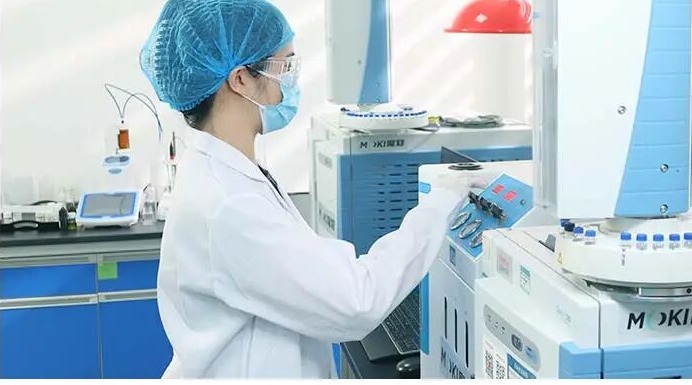
At the material approval stage, we maintain a tiered supplier whitelist aligned with multiple international compliance requirements, applying a dual verification mechanism of document review plus laboratory testing. For core vaping materials, we check supplier qualifications, Safety Data Sheets (SDS) and third-party test reports item by item, strictly controlling heavy metals, VOCs and impurity limits. Testing of built-in lithium batteries covers the complete cell and protection-board assembly; beyond safety performance, cycle life and charge/discharge protection tests, selection is made against the sustainability and maintainability requirements of the EU Batteries Regulation in advance. If a supplier changes a formulation, switches a cell or moves its place of production, a full retest is triggered immediately to prevent any compliance gap.
For packaging, all outer cartons, inner trays, cushioning foam and shrink film used on EU orders are included in the testing scope. From 12 August 2026, the combined content of lead, cadmium, mercury and hexavalent chromium in packaging homogeneous materials must not exceed 100 mg/kg. MOKI has already optimized its packaging supply chain, tightly controlling high-risk structures such as multi-layer dissimilar-material laminates, assessing packaging recyclability grades to avoid the risk of being barred from the market for falling below a 70% recycling rate, and applying the packaging-minimization principle by designing ahead of the 2030 void-space requirements (sales packaging void ratio ≤ 50%), leaving ample compliance margin.
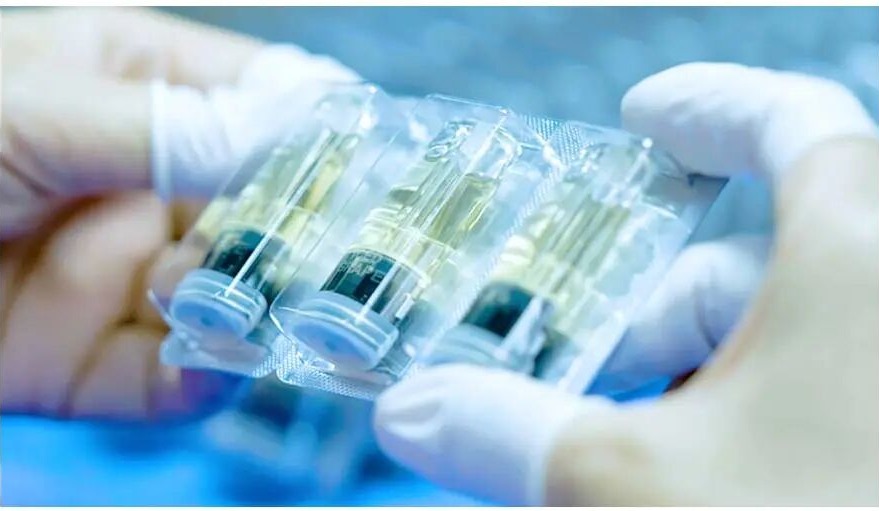
Consistent quality comes from a controllable supply chain. MOKI conducts routine audits of suppliers of e-liquid, battery cells and packaging, continuously tracking changes to formulations, models, processes and places of origin. All incoming materials support batch traceability, with retained samples and complete compliance files kept on record to handle regulatory spot checks in China and overseas with confidence.
Source control is only the starting point. IQC incoming inspection, IPQC in-process inspection, FQC final inspection and OQC outgoing inspection connect seamlessly, forming a standardized compliance closed loop spanning material approval, production, finished-product testing and warehouse dispatch.

This end-to-end control is more than a slogan: it runs as a routine within a mature management system. MOKI is certified to ISO 9001 for quality management, GMP for good manufacturing practice and ISO 14001 for environmental management. Cleanroom zoning, standardized operations, preventive equipment maintenance, document control and data trails are all implemented in line with these systems.
From incoming materials to outgoing finished goods, four gates layer their defences and leave a record at every step. The certification systems are the management backbone, while the closed loop of incoming, in-process, finished-product and outgoing control is what puts compliance into every single device.
We remain committed to front-loaded compliance, keeping pace with new global rules, dynamically updating our test items and keeping our internal quality system aligned with regulatory requirements. Whether for core components such as e-liquid and lithium cells or for auxiliary materials such as cartons and thermoformed trays, MOKI inspects every material and tests every batch. With verifiable test data, complete compliance files and full-chain traceability, we help customers in China and overseas avoid the three major compliance risks of materials, batteries and packaging, so products clear customs smoothly and reach the market reliably.
Quality First, Compliance by Design
As global market-access rules grow ever more demanding, MOKI will keep strengthening its front-line quality defences, embedding product safety and compliance into every link of the supply chain, and helping customers expand steadily into global markets with solid, dependable manufacturing capability.